
Last updated October 17, 2026
 Metal roofing
 Architectural shingles
 Tile roofing
 GAF
GAF Owens Corning
 Flat & low-slope
Free roof inspection with deck photos before we talk money - GAF and Owens Corning certified installation
Roofing Warning Signs: A Sacramento Homeowner’s Reference Guide
The first sign of a failing Sacramento roof is almost never a visible exterior defect. It’s a smell in the attic in October that homeowners dismiss as “musty from being closed up all summer.” That smell is frequently active mold feeding on a slow leak that has been running since the previous February, hidden inside the roof assembly where no contractor has been called to look. This guide and our Complete Guide to Roofing in Sacramento explain what roof damage sounds, smells, and feels like before it shows up in a photograph, and this page gives you a severity scale so you know whether to watch, schedule, or call this week. You will learn the specific failure points common to Sacramento roof designs, how to distinguish cosmetic wear from structural trouble, and how to document a warning sign well enough that a contractor can give you a meaningful phone assessment before you commit to a service call.
Quick Answer
In Sacramento, the most reliable early warning signs of a failing roof are interior: a musty or earthy attic smell that persists after ventilation improves, discolored insulation or truss staining in specific patterns, and ceiling spots that darken or expand. Exterior signs that demand prompt attention include granule loss beyond normal aging, cracked or lifted flashing around penetrations, and efflorescence, a white mineral crust, on concrete tile. A homeowner who checks the attic twice a year and documents what they find with dated photos will catch most Sacramento roof failures months before exterior damage becomes obvious or expensive.
Styles & brands we work with
Table of Contents
- The Interior Signs Most Sacramento Homeowners Miss
- Exterior Failure Points Common in Sacramento Roof Designs
- Cosmetic Issue or Structural Warning: How to Tell the Difference
- Sacramento-Specific Warning Signs National Guides Miss
- The Severity Scale: Watch, Schedule, or Call This Week
- How to Document a Warning Sign for a Meaningful Phone Assessment
- What to Expect When You Make the Call
The Interior Signs Most Sacramento Homeowners Miss
Roof leaks in Sacramento rarely announce themselves with a sudden drip. They begin as moisture that moves through the roof assembly slowly over months, changing the air in your attic and leaving traces on materials before any water reaches your ceiling. Here are the interior signs we tell every Sacramento homeowner to learn, because exterior damage is often invisible from the ground until the problem is already advanced.
Attic Smell That Doesn’t Go Away
A musty or earthy smell in the attic is the single most overlooked roof warning sign in Sacramento homes. Many homeowners write it off as normal, especially in October when the first rains arrive after months of dry heat. But active mold from a slow leak has a smell that persists even after you run a fan or open the vents. If you notice the odor is stronger after rain, or stronger in one area of the attic than another, that is a roof leak signature, not stale air.
Insulation Discoloration
Fiberglass batt insulation and blown-in cellulose both change appearance when they have been wet and then dried repeatedly. Look for batts that have turned brownish or gray in patches, or blown-in insulation that has settled into dense, crusty zones. Water from a roof leak runs down through the insulation and leaves mineral residue behind as it dries. That residue marks the path of the leak and often points directly to the roof penetration or seam where the water is entering.
Truss and Sheathing Staining
Dark staining on roof trusses or plywood sheathing is not always an active problem, but it is always worth investigating. Water that runs along the underside of the roof deck leaves visible trails. Active leaks produce stains that feel damp to the touch and may have a soft or spongy surface. Older, dried stains indicate a past leak that may have been repaired or may have simply stopped showing at the ceiling because the water found a new path. A roofing contractor who looks at your photo can often tell the difference from the pattern alone.
Ceiling Spots That Change Shape
A ceiling spot that stays exactly the same size and color for two years is probably cosmetic. A ceiling spot that expands, darkens, or develops a brownish ring is an active leak. In Sacramento, ceiling spots often first appear in late winter after the wettest stretch of the year, then fade in summer and mislead homeowners into thinking the problem resolved itself. Track any ceiling spot with monthly photos. If it changes, the leak is still open.
Exterior Failure Points Common in Sacramento Roof Designs
Sacramento roofs share a set of failure points driven by local climate, soil, and construction history. Knowing these points helps you look in the right places instead of scanning a whole roof with no idea what you are seeing. This section maps the six most common exterior warning signs we see on homes across Sacramento, from Land Park to Natomas to Elk Grove.
Flashing Failure at Penetrations
Flashing is the metal material used to seal the places where the roof is interrupted: chimneys, plumbing vents, skylights, and walls. In Sacramento, flashing endures extreme temperature swings between summer afternoons and winter nights. Metal expands and contracts with every swing, and over ten or fifteen years, the sealant and fasteners on flashing begin to fail. Lifted flashing, cracked sealant at the edges, or rust staining running down from a penetration are all warning signs that a leak is either active or imminent. This is the area where most roofs leak first, and it is one of the easiest to document with a photo from a ladder or an upper window.
Granule Loss Beyond Normal Aging
Every asphalt shingle roof loses some granules over its life. You will see them in the gutters after a storm, especially on an older roof. Normal granule loss is light and consistent. Warning-level granule loss shows up as bare or balding patches on shingles, or piles of granules that accumulate at the bottom of downspout bends. When the granules are gone, the asphalt below is exposed to Sacramento’s intense summer UV radiation, and the shingle ages rapidly from that point forward. A roof with widespread granule loss may be two or three seasons from active leaks.
Cracked or Missing Ridge Cap
The ridge cap is the row of shingles or tiles that covers the peak where two roof planes meet. It takes the most direct sun and weather of any roof component. In Sacramento, ridge cap failure is common on homes built in the 1990s and 2000s, where ridge cap materials often age faster than the main field of the roof. Cracked, curling, or missing ridge cap shingles should be addressed on a “schedule” basis: not an emergency, but not something to watch for another year either. A failed ridge cap lets water into the attic through the very top of the roof, where it then travels along trusses and drips far from the point of entry.
Cosmetic Issue or Structural Warning: How to Tell the Difference
One of the most useful skills a Sacramento homeowner can build-along with reading our DIY vs Professional Roofing: The Sacramento Homeowner’s Decision Guide-is the ability to look at a roof condition and know whether it needs a photo sent to a contractor or just a mental note for next year. Not every imperfection is a failure. Some conditions look far worse than they are, while others look minor and are quietly doing real damage. Here is a practical way to sort what you see.
Cosmetic issues include surface granule loss on a newer roof, light moss growth on shaded north-facing slopes, minor mortar cracking on tile hips that does not progress, and small dents in metal flashing from hail or falling branches. These conditions do not threaten the roof’s water-shedding function in the near term. They should be watched and photographed once a year, but they do not require any action beyond monitoring.
Structural warning signs are conditions that compromise the roof’s ability to keep water out of the house. They include lifted flashing, cracked vent boots, missing shingles or tiles, sagging rooflines, soft decking that flexes under foot, and any interior staining or smell pattern that points to active moisture. These are conditions that should be photographed and sent to a contractor within 30 days. A structural warning sign left unaddressed in Sacramento’s wet season can turn a $400 repair into a $4,000 repair in a single winter.
When a roof condition falls in between, use the question we ask ourselves on every inspection: can water get through? If the answer is yes, or if you cannot tell from what you can see, treat it as structural until a professional tells you otherwise. The cost of a service call is modest compared to the cost of replacing a section of roof decking and insulation after months of unnoticed leakage.
Sacramento-Specific Warning Signs National Guides Miss
Most roofing warning signs guides are written for a national audience and miss the conditions that Sacramento homeowners actually face. Here are four warning signs we see frequently on Sacramento roofs that rarely appear in generic guides.
Efflorescence on Concrete Tile
Efflorescence is a white, chalky mineral deposit that forms on the surface of concrete roof tile. It appears when water moves through the tile and carries soluble minerals to the surface, where they dry and leave the residue behind. In Sacramento, efflorescence is common because of the mineral content in Valley water and the extended wet-dry cycling of our rainy season. A light, even haze of efflorescence on a tile roof is usually cosmetic. But thick, crusty deposits, especially concentrated near the eaves or in patterns that follow the roof slope, indicate water is moving through the tile profile in a way it should not. The cause is often failed underlayment beneath the tile, which is invisible from the surface and requires a professional evaluation.
HVAC Duct Condensation Mistaken for Roof Leaks
Sacramento summers are long and hot, and attic temperatures routinely exceed 130 degrees. When HVAC ducts run through an unconditioned attic, the outside of the duct can sweat in summer, producing condensation that drips onto the ceiling below. Homeowners report the ceiling spot to a roofer, but the roof is dry. The giveaway is timing: condensation spots tend to appear during the hottest months, while true roof leaks in Sacramento appear during or after rain. The fix for duct condensation is attic ventilation or duct insulation, not roof repair. A good contractor will ask about the timing of the spot before recommending any work.
Gutter Separation from Clay-Soil Settlement
Sacramento sits on clay-rich soils that expand when wet and shrink when dry. Over years of wet winters and dry summers, the soil under a foundation moves enough to shift the structure slightly. Gutters are one of the first places this movement shows up. Gutters that have pulled away from the fascia, or that drain slowly because the slope has changed, are often a sign of soil settlement rather than a roofing failure. The gutter issue does need correction, because water that cannot drain properly backs up under the eaves and rots the fascia and sheathing. But the underlying cause is the foundation movement, not the roof itself. When you see gutter separation, document it and mention the soil conditions in your area when you call a contractor.
Valley Flashing Wear on Steep-Slope Tile Profiles
Roof valleys are the V-shaped channels where two roof planes meet and water concentrates. In Sacramento, valley flashing on tile roofs wears faster than the surrounding field because of debris accumulation and the concentrated water flow. Cracked or rusted valley metal, missing sections of valley liner, or tile that has shifted in the valley are all warning signs that water is getting under the tile profile. These conditions are hard to see from the ground and are often discovered only when a contractor walks the roof for an annual inspection.
The Severity Scale: Watch, Schedule, or Call This Week
Every roof warning sign falls into one of three categories. The goal of the scale is to give you a decision instead of a dilemma. Here is how we classify conditions when Sacramento homeowners send us photos or describe what they are seeing.
Watch
- Light, even granule loss on an older roof with no bare patches
- Small, stable ceiling spots that do not change over multiple seasons
- Faint efflorescence on tile surfaces with no thick crust
- Minor moss growth on shaded slopes that does not hold moisture for long after rain
- Hairline cracks in tile or shingles that do not penetrate the material
Watch items should be photographed once a season from the same vantage point. If the condition changes, it moves up the scale.
Schedule
- Lifted or cracked flashing at a single penetration
- Missing ridge cap shingles or tiles on one section of the ridge
- Bare or balding patches on asphalt shingles
- Pooling water on a flat or low-slope section that dries within 48 hours
- Any interior smell or staining that appears after rain and fades during dry spells
Schedule items should trigger a call to a roofing contractor within 30 days. These are conditions that will worsen, but not overnight. A professional evaluation now prevents them from becoming calls you make in a panic during the next rainstorm.
Call This Week
- Active water intrusion: water entering the attic or living space during or immediately after rain
- Sagging roofline or visible deflection in the roof plane
- Soft, spongy decking that flexes when walked on
- Missing sections of flashing at a chimney or wall intersection
- Multiple simultaneous leaks or staining patterns in different rooms
Call This Week items are the ones where the cost of delay compounds daily. In Sacramento, a small leak that starts in November becomes a major repair by February if left unaddressed. Call a licensed roofer and schedule an inspection. Roof repair in Sacramento is most affordable when the problem is still contained to one penetration or seam.
How to Document a Warning Sign for a Meaningful Phone Assessment
A roofing company cannot give you a useful phone assessment from a description like “there’s a dark spot on the ceiling.” But a few well-taken photos can often allow an experienced contractor to tell you what you are likely dealing with and how urgent it is before committing to a service call. Here is the exact process we recommend to Sacramento homeowners.
- Photograph the interior condition first. Stand far enough back to show the spot or stain in context (which room, which wall it is near), then take a close-up that shows the texture and color. Date your photos or enable timestamps.
- Go into the attic if you can safely access it. Photograph the underside of the roof deck in the area directly above the interior condition. Use a flashlight and photograph any staining, dampness, or discolored insulation you find. Wide shot first, then close-up.
- Photograph the exterior roof area from the ground. Use a camera with real zoom, not a phone’s digital zoom if you can avoid it. Capture the general slope, then zoom in on the specific area above the interior condition. Look for lifted shingles, cracked flashing, or missing material.
- Note the timing. Write down when you first noticed the issue, whether it appeared during or after rain, and whether it has changed since you first saw it. This timing information is often more diagnostic than the photos themselves.
- Send the photos with the timing notes by text or email. A contractor who asks for photos before scheduling is doing you a favor: it means the person who arrives will already know what they are looking at.
When you call, expect the company to ask about the age of the roof, the roofing material, and whether you have had any prior repairs. That context helps the estimator connect what they are seeing in your photos to the likely failure point. At Tilehurst Roofing Sacramento home, we walk through this same set of questions with every homeowner who calls, and we provide a written price before any work starts, whether we are able to assess from photos or need to schedule an in-person visit.
What to Expect When You Make the Call
If you have documented a warning sign and you are ready to call a roofing contractor in Sacramento, here is what a well-run process looks like, and what questions you should ask before anyone steps onto your roof.
A real person answers the phone. You should not have to leave a voicemail and wait for a callback to find out whether a roofer can help you. At Roofing Company in Sacramento, the standard is a live person on every call, 24 hours a day. If the company you call cannot manage that, keep looking.
You get a written price before work starts. A contractor who will not put a price in writing before beginning is telling you something important about how they run their business. Written pricing is the only way to protect yourself from the price-at-the-door tactic that has become too common in roofing. Ask for it. If the answer is anything other than yes, move on.
The contractor can explain what they are seeing in plain language. You should be able to understand every term a roofer uses, from drip edge to decking to underlayment. Drip edge is the metal strip that directs water away from the roof’s edge. Decking is the plywood or OSB layer beneath your roofing material. Underlayment is the water-resistant barrier between the decking and the shingles or tile. A professional explains these terms as they go. If a contractor talks past you, that is a signal about the rest of the experience.
The guarantee is in writing before the crew leaves. A written guarantee on every repair is the floor, not a premium add-on. Ask what the guarantee covers, how long it lasts, and what happens if the repair fails. At Tilehurst Roofing Sacramento, every repair comes with a written guarantee delivered before the crew leaves, and if the repair fails inside the guarantee period, we return to correct it at no charge under the 365-Day Done Right Promise.
You have genuine material choice. A roofer who only offers one brand is often selling what happens to be in their truck, not what fits your home. As a member of the Kingswell family of roofing companies, we carry options from seven leading manufacturers, including GAF, CertainTeed, Owens Corning, and IKO, so the product fits the home and the homeowner’s priorities, whether that is longevity, appearance, or budget.
Common Mistakes to Avoid
- Dismissing the October attic smell as “just closed up all summer.” In Sacramento, the first rains after the dry season reveal leaks that have been open but dormant for months. If the smell persists after you ventilate the attic, it is active mold, not stale air.
- Ignoring ceiling spots that fade in summer. Sacramento’s dry season temporarily masks many roof leaks. A spot that disappears in August is not a resolved problem; it is a problem waiting for the next rain.
- Assuming granule loss means the roof needs replacing. Granule loss is a warning sign, not necessarily a death sentence. The extent and pattern of the loss determine whether a repair or a replacement is the right call. A contractor who recommends replacement on the first visit without explaining the specific reasons should be questioned.
- Treating efflorescence as a cosmetic non-issue without checking the underlayment. Light efflorescence is cosmetic. Thick, crusty efflorescence indicates water moving through the tile profile, and the cause is often failed underlayment that is invisible from the surface.
- Waiting until exterior damage is visible from the ground to call. By the time a Sacramento roof shows obvious exterior failure, the interior damage is usually months old. The interior signs, attic smell, insulation discoloration, truss staining, appear far earlier and are your best early-warning system.
- Not photographing the condition before calling. A roofer who cannot see what you are seeing has to guess. Dated photos taken from a few angles turn a vague phone call into a useful assessment and save everyone time.
- Choosing a contractor on price alone. A Sacramento homeowner who has been burned once already knows this instinctively, but it bears repeating: the cheapest bid often includes the least accountability. Ask about written pricing, written guarantees, and what happens if the repair fails before making a decision.
See the difference
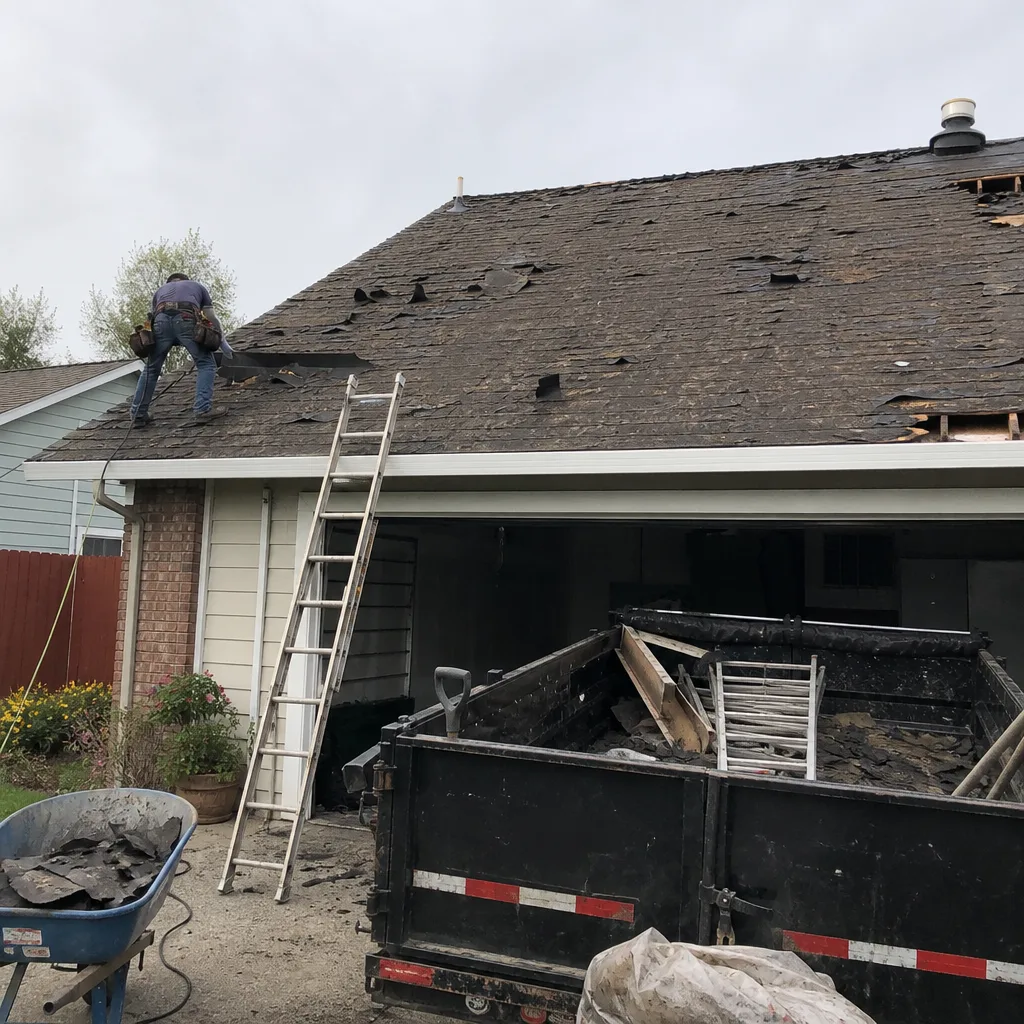 Before
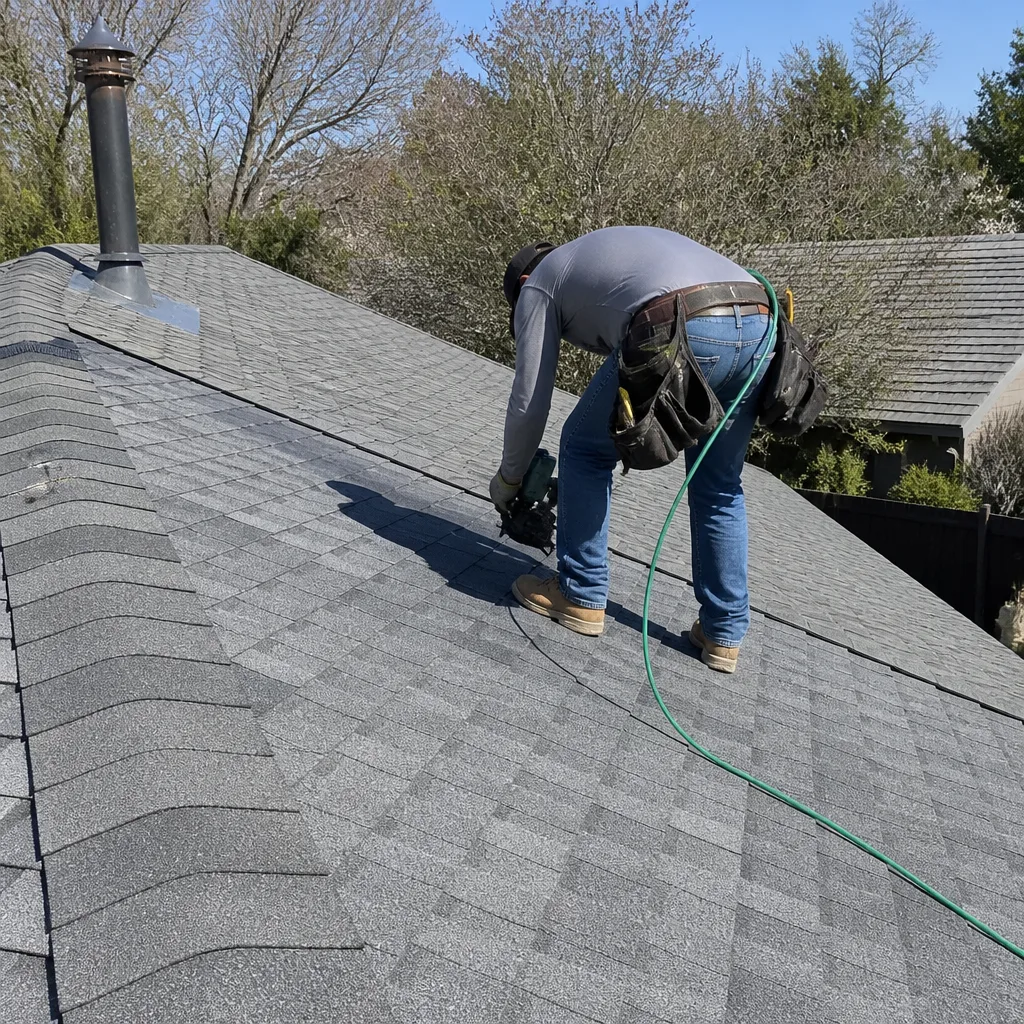 After
After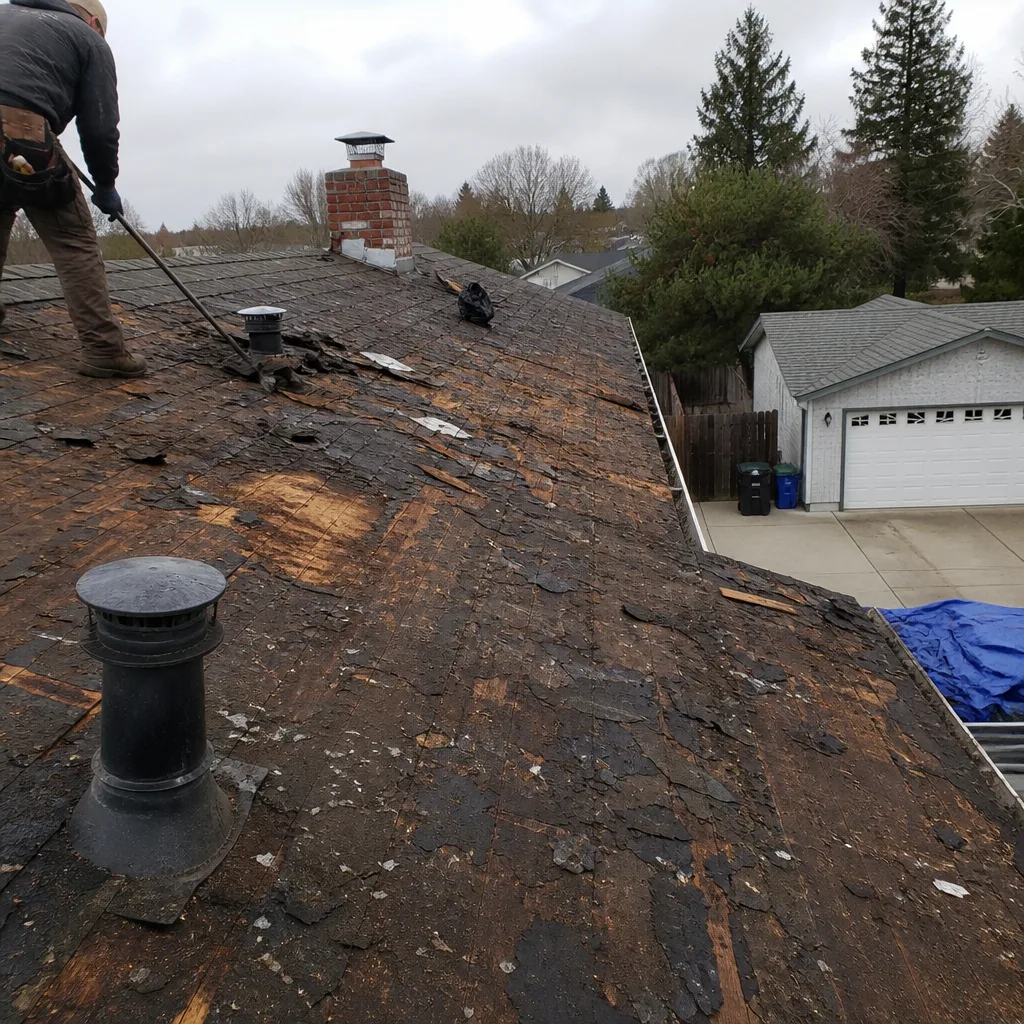 Before
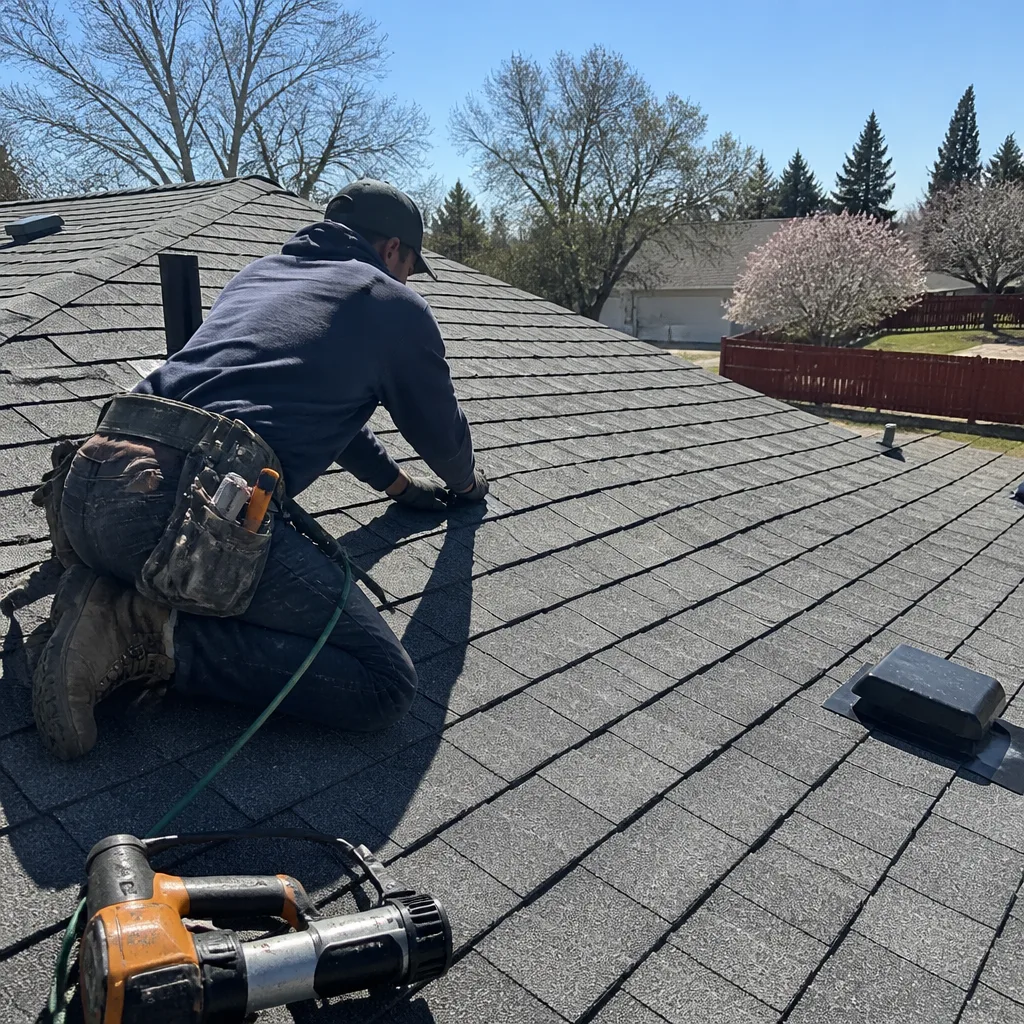 After
After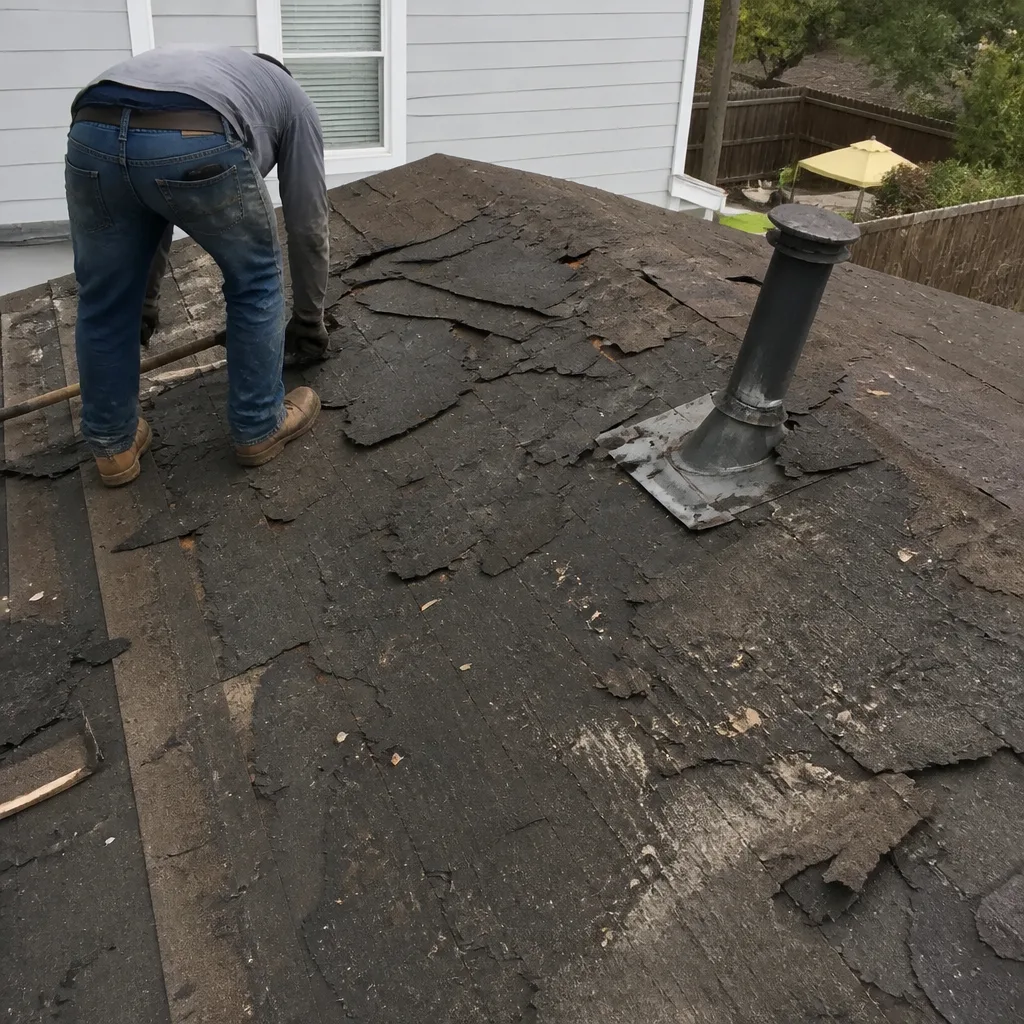 Before
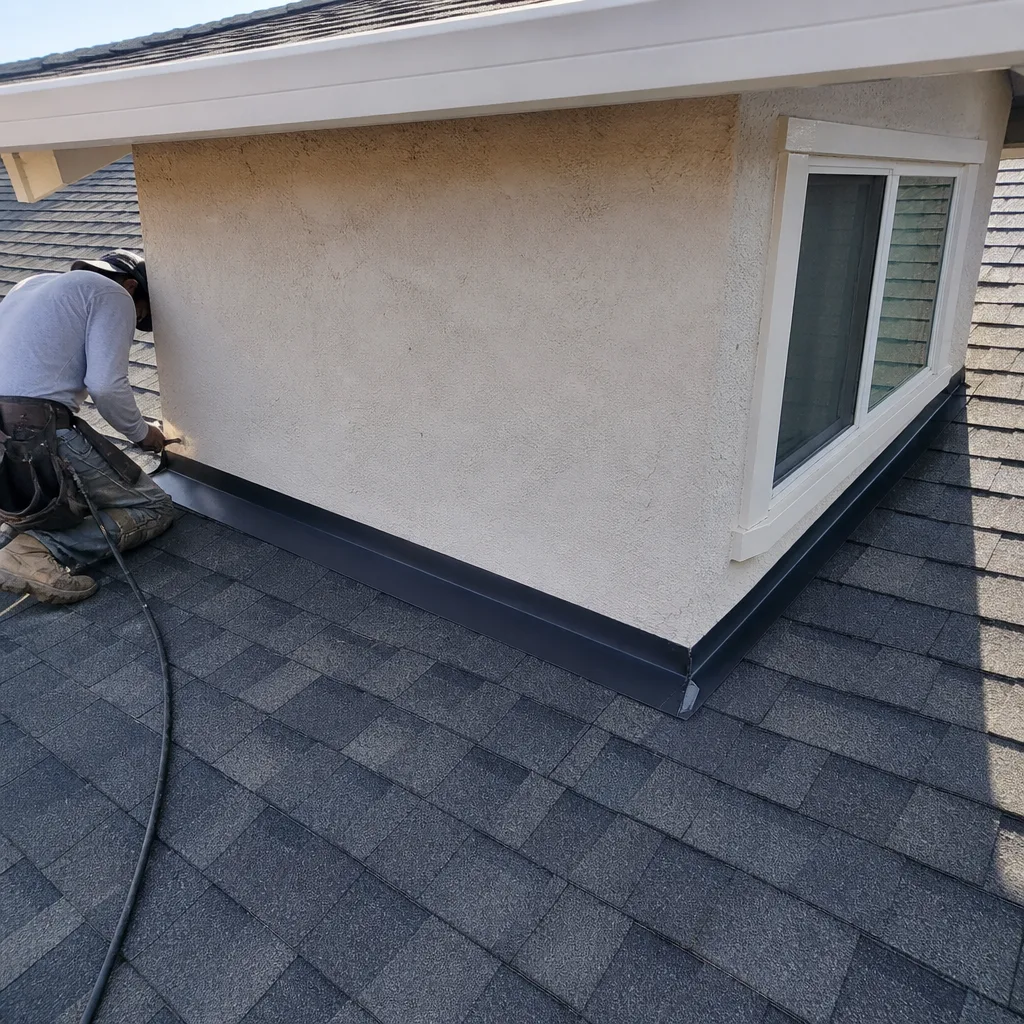 After
AfterWhen to Call a Professional
Call a professional when any of the following conditions appear: an interior smell or staining that returns or worsens after rain, visible flashing damage at any roof penetration, bare or balding patches on asphalt shingles, sagging in the roof plane, soft decking that flexes when pressed, or any active water intrusion into the attic or living space. If you see a Call This Week condition from the severity scale, do not wait. Sacramento’s wet season turns small leaks into major repairs with surprising speed. Tilehurst Roofing Sacramento offers free estimates on roof repair and replacement in Sacramento. Call (279) 348-3049 and a live person will answer, day or night.
Frequently Asked Questions
The most common early warning sign in Sacramento is a musty attic smell that persists after ventilation, which usually indicates a slow leak that has been active for months without reaching the ceiling. Dismissing this smell as normal fall stale air is the single biggest mistake homeowners make in this region. If the smell lingers after you open the vents or run a fan, call a roofer for an evaluation. Call (279) 348-3049 for a free estimate.
Most flashing repairs and single-penetration leak fixes on Sacramento homes run between $350 and $800 depending on the material and the access difficulty. Repairs that involve replacing decking or sections of underlayment can run $1,200 to $3,000. The only way to know your exact cost is to have an experienced roofer evaluate the specific condition, which is why written pricing before any work begins matters. Call (279) 348-3049 for an exact quote, estimates are free.
You should not ignore a small leak past the current wet season, because Sacramento’s winter rains compound damage quickly and a $400 flashing repair in November can become a $4,000 decking and insulation replacement by February. The interior damage from slow leaks, mold, truss staining, insulation degradation, also accelerates the longer water is present. Call (279) 348-3049 to schedule an evaluation before the next rain.
Yes. Sacramento’s long, hot summers expose roofing materials to intense UV radiation and extreme temperature swings that expand and contract metal flashing, dry out sealants, and accelerate granule loss on asphalt shingles. The same roof in a coastal climate would age more predictably. This is why Sacramento homeowners should inspect their roofs in spring and fall, the two shoulder seasons before the temperature and moisture extremes arrive, as detailed in our Seasonal Roofing Care for Sacramento: Year-Round Homeowner’s Guide.
You can spot some warning signs from the ground: lifted shingles, missing tiles, sagging planes, and cracked flashing are often visible with good light and a pair of binoculars. But many serious roof problems, failed underlayment, decking deterioration, valley flashing wear, are invisible from the ground and only show up during an on-roof inspection or through the interior signs described above. If you suspect a problem but cannot see it, call a roofer who will walk the roof and document what they find with photos.
First, contain the water with a bucket or bin and move anything valuable out of the area. Second, photograph the leak and the affected area in the attic if you can safely access it. Third, call a roofing contractor that same day. Even if the crew cannot make the repair until the storm passes, getting the evaluation process started quickly matters. Tilehurst Roofing Sacramento answers every call with a live person, 24 hours a day, so you can reach someone when the storm is happening, not the following Monday. Call (279) 348-3049.
The Bottom Line
Sacramento roofs fail from the inside out. The warning signs that matter most are the ones you cannot see from the street: the attic smell that will not clear, the insulation that darkens in patches, the truss stains that map the path of a slow leak. Learn these signs, photograph them when they appear, and act on the severity scale instead of guessing, or explore more guides & resources for Sacramento homeowners. Cosmetic issues deserve a watchful eye. Structural warnings deserve a contractor’s eyes within 30 days. And honest companies put their pricing and their guarantee in writing before any work begins. When you call a roofer in Sacramento, you should get a live person, a written price, and a plain-language explanation of what you are looking at.
Roof replacement in Sacramento is a major decision, and you should not make it under pressure from a storm or a door-to-door pitch. Use this guide to understand what your roof is telling you, document it carefully, and call when the signs point to action.
Written by Greg Holloway, Owner at Tilehurst Roofing Sacramento, serving Sacramento since 2000.