
 Tile roofing
 Architectural shingles
 Metal roofing
 GAF
GAF Owens Corning
 Flat & low-slope
Free roof inspection with deck photos before we talk money - GAF and Owens Corning certified installation
IKO Flashing Replacement: The Sacramento Owner’s Guide
IKO flashing replacement in Sacramento typically runs $220 – $480 installed for a single penetration (vent pipe, chimney corner, or wall transition), depending on access difficulty and how much surrounding shingle work is involved. We stock IKO-compatible flashing on our trucks and can usually complete the swap the same day we diagnose it. Most homeowners discover the problem the way you probably did: a water stain on the ceiling after a hard rain, or granules collecting in the gutter below a pipe boot that has cracked open from years of Sacramento sun.
Flashing is the metal or rubber collar that seals the joints where your roof meets something else, a pipe, a chimney, a wall, a skylight. When it fails, water gets in. It is that simple. And in Sacramento, where summer afternoons routinely push roof surfaces past 140 degrees, flashing materials age faster than the shingles around them. The IKO shingles on your roof may have decades of life left while the flashing above them has quietly reached the end of its own.
Which IKO Models This Applies To
This replacement guidance applies across IKO’s residential shingle lines: Cambridge, Dynasty, Nordic, Marathon, and Royal Estate. The flashing itself is not shingle-model-specific in most cases, meaning the same pipe boot or step flashing works whether your roof carries Cambridge or Dynasty. What matters more is the roof’s age and the flashing type originally installed. IKO systems installed in the last 10 to 15 years typically use standard galvanized or aluminum step flashing at walls and chimneys, and either neoprene or EPDM rubber pipe boots at plumbing vents. Galvanized step flashing has a realistic service life of 15 to 20 years in Sacramento’s dry, high-UV climate. Neoprene boot collars often split and crack by year 10 to 12, which is why so many of the flashing failures we address are at vent pipes rather than walls.
The OEM versus aftermarket decision is straightforward for flashing. IKO does not manufacturer its own flashing; the company specifies standard industry components as part of its roofing system instructions. So there is no material advantage to paying more for an IKO-branded label here. We use the same galvanized steel, aluminum, and EPDM components any IKO-trained installer uses, matched to the existing gauge and profile so the repair blends with the roof. The compatibility gotcha to watch is gauge mismatch: some Sacramento homes built in the early 2000s have flashing installed from lighter 26-gauge stock that now tears when stepped on. We replace it with heavier 24-gauge material as a matter of practice, regardless of what the original contractor used. If you can safely access your attic, look for the IKO shingle wrapper label stapled inside; it tells us the exact line and, usually, the install year, which helps us predict what else may be aging.
Styles & brands we work with
Signs Your IKO Flashing Replacement Is Failing
- Ceiling stains below a plumbing vent or wall line – Water traveling along a failed pipe boot or step flashing usually shows up as a brown or amber discoloration on the ceiling below a bathroom vent, kitchen wall transition, or chimney face. The stain often appears days after the rain, once water has worked through insulation and drywall.
- Rubber boot collar cracked, stiff, or pulled away from the pipe – From the ground or a ladder, look at the rubber collar around any pipe projecting through the roof. If it looks like cracked desert soil, or has separated from the pipe leaving a visible gap, water is entering. This is the single most common flashing failure we see in Sacramento because UV breaks down EPDM rubber predictably here.
- Shingles curling upward at chimney corners or wall intersections – The shingle edge lifting away from step flashing underneath means the metal is either rusted through or the sealant bond has failed. A lifted shingle at a transition point is not cosmetic; it is an entry point the next rain will find.
- Granules and small metal flecks collecting in gutters below a flashing point – Roof cement and exposed metal weather differently than shingles. If you see consistent debris below one pipe or one wall edge but not elsewhere, that flashing point is degrading faster than its surroundings.
- Visible daylight in the attic around any penetration – On a sunny day, go into the attic and look toward vents and chimneys. Any pinprick of light where a pipe passes through the decking means the flashing’s seal has failed completely. If you can see sky, water can and will come through.
See the difference
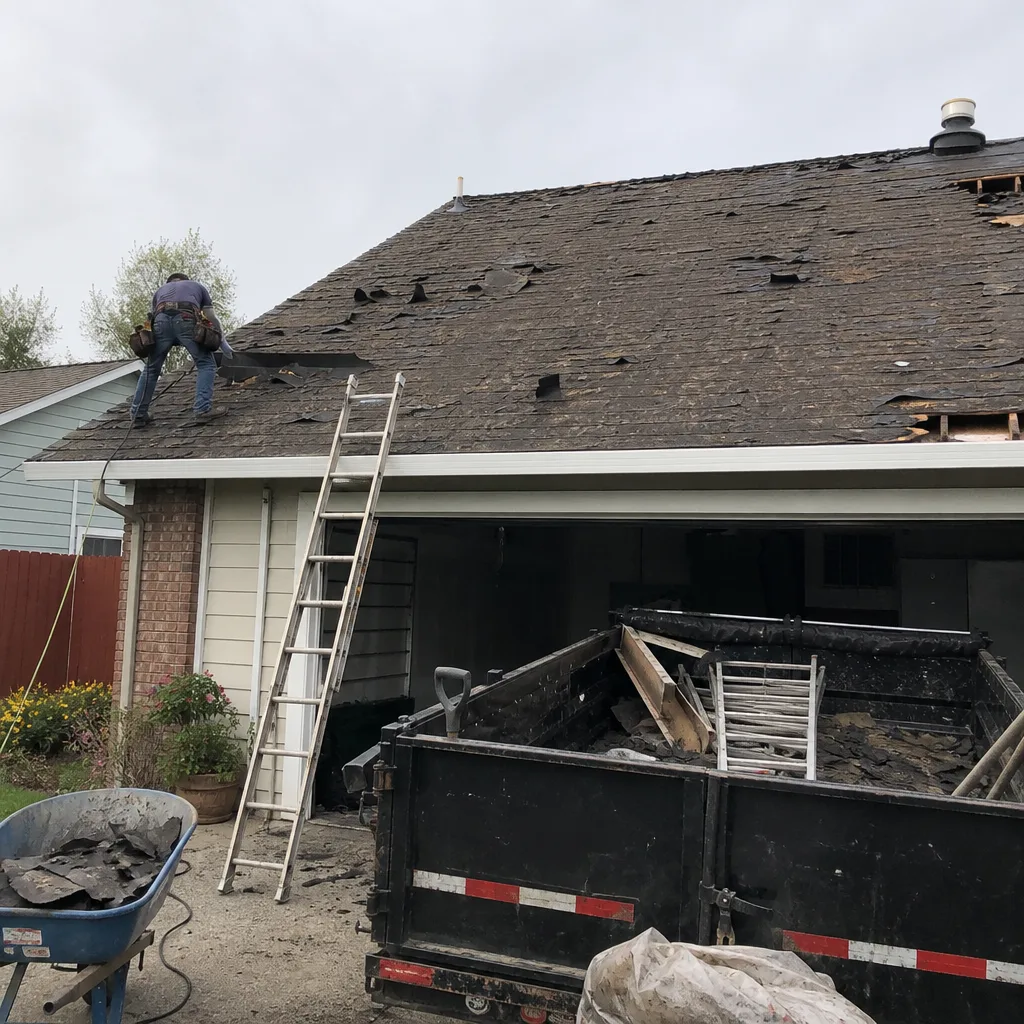 Before
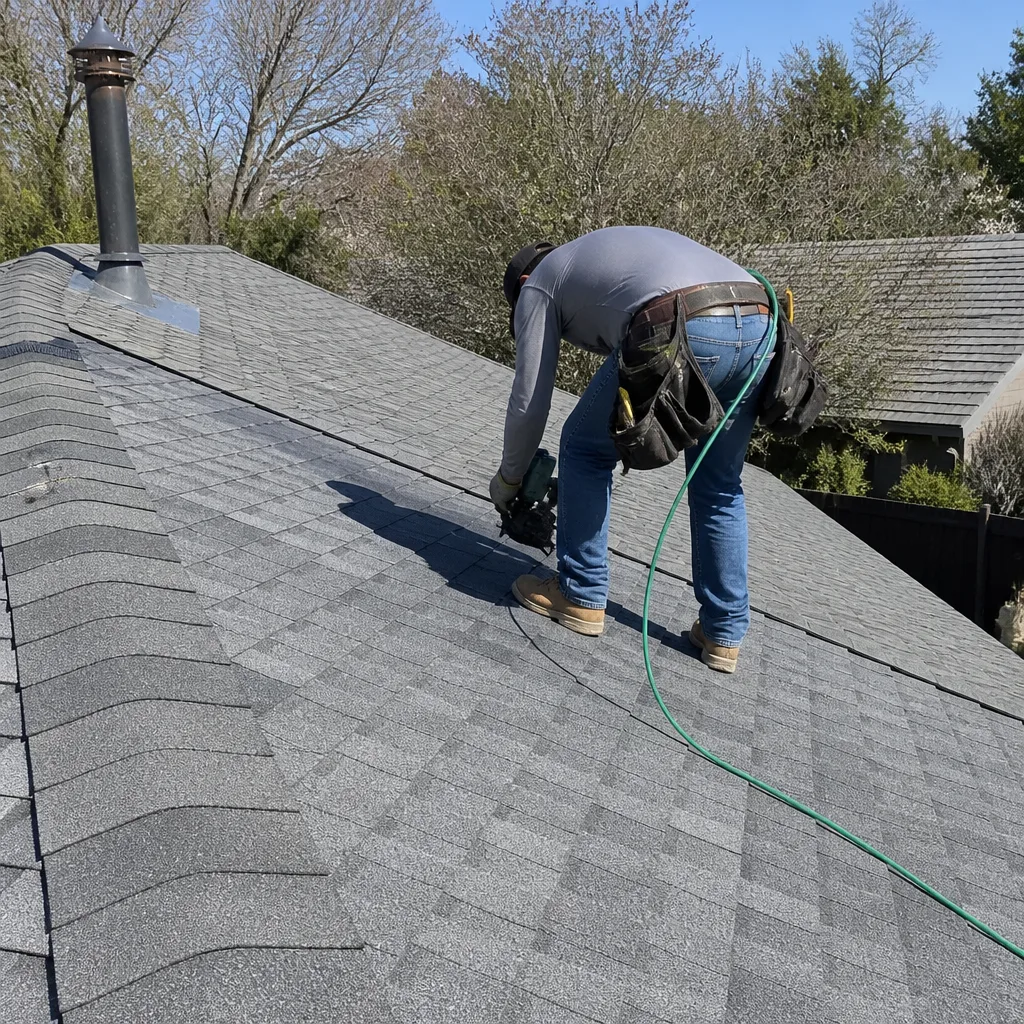 After
After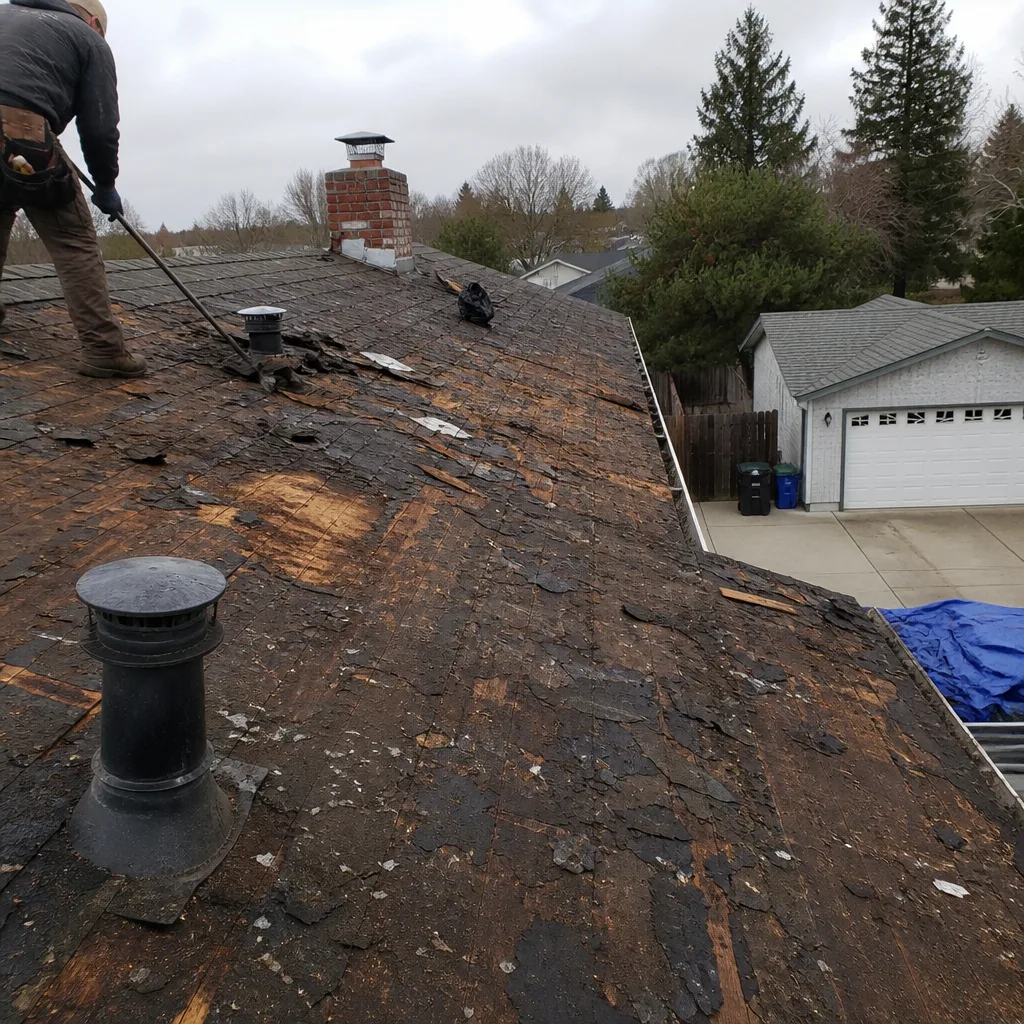 Before
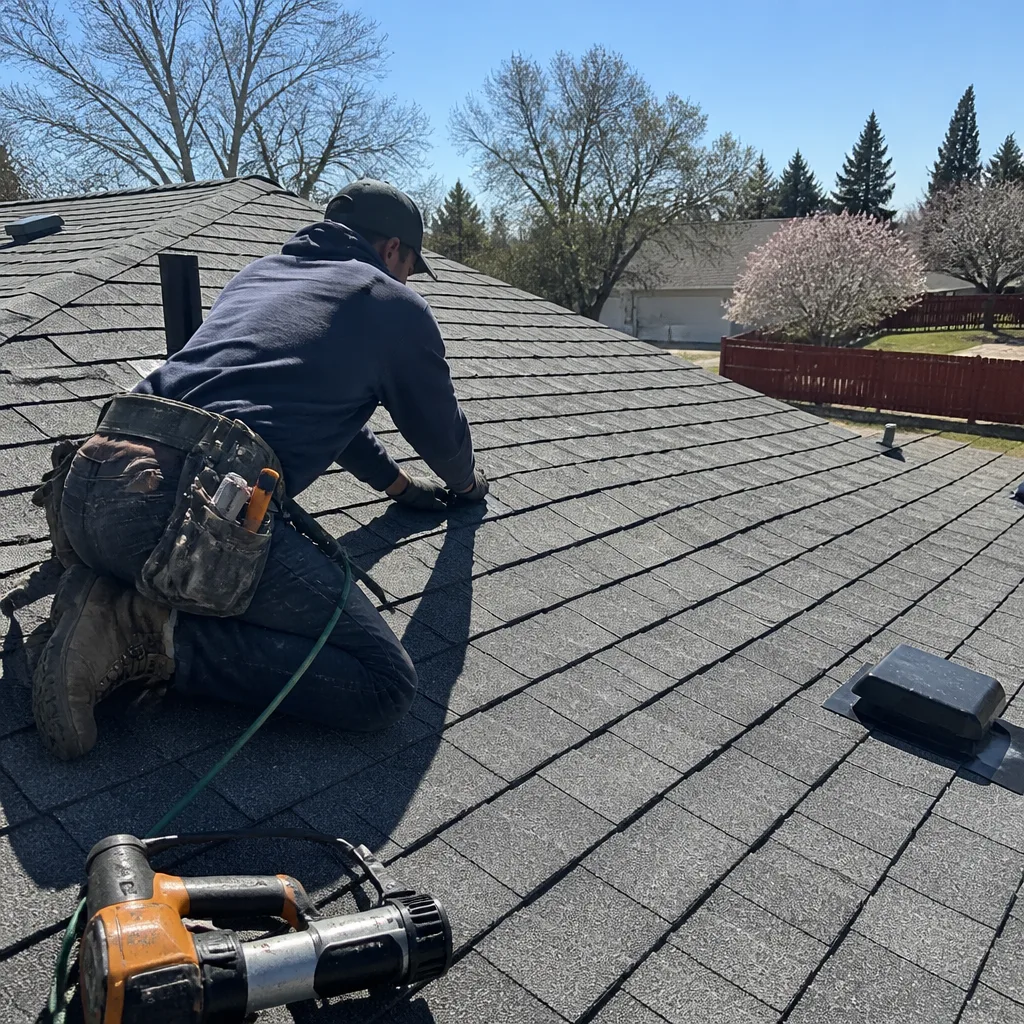 After
After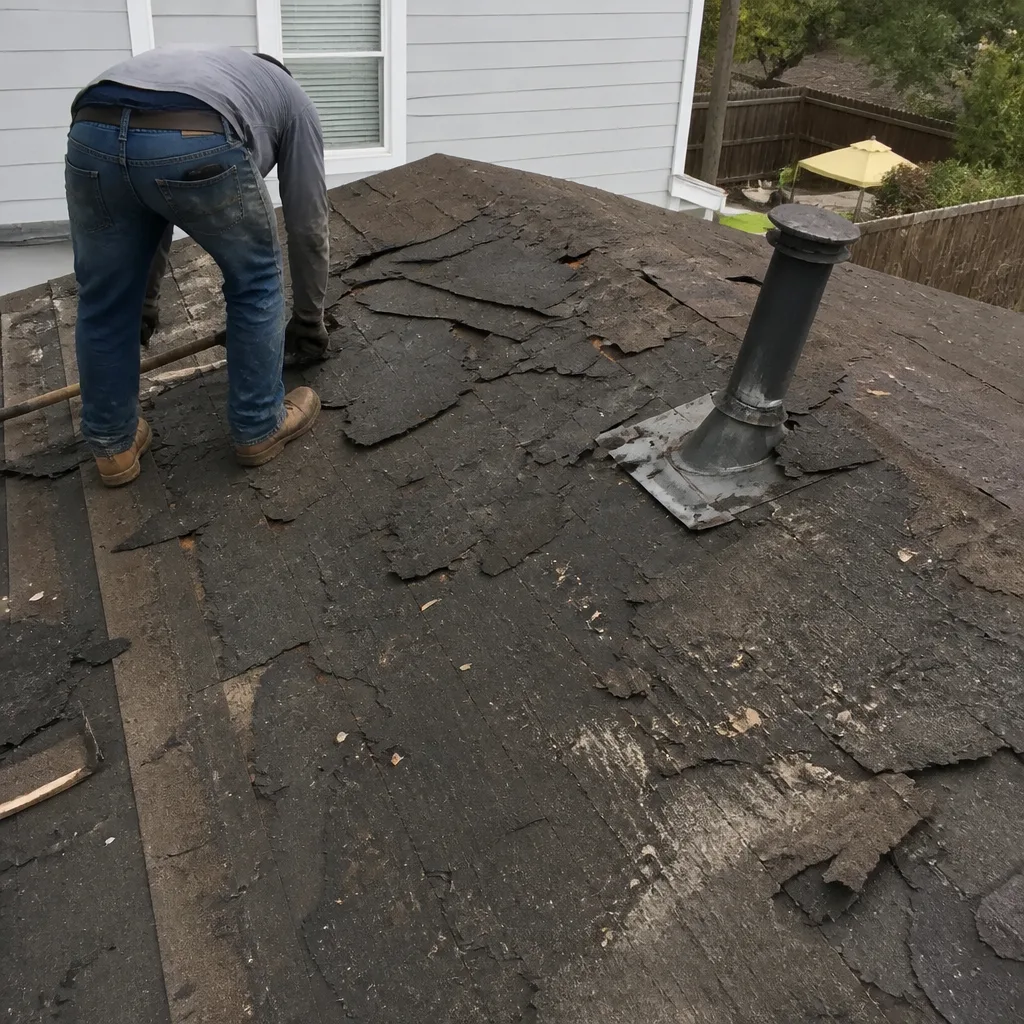 Before
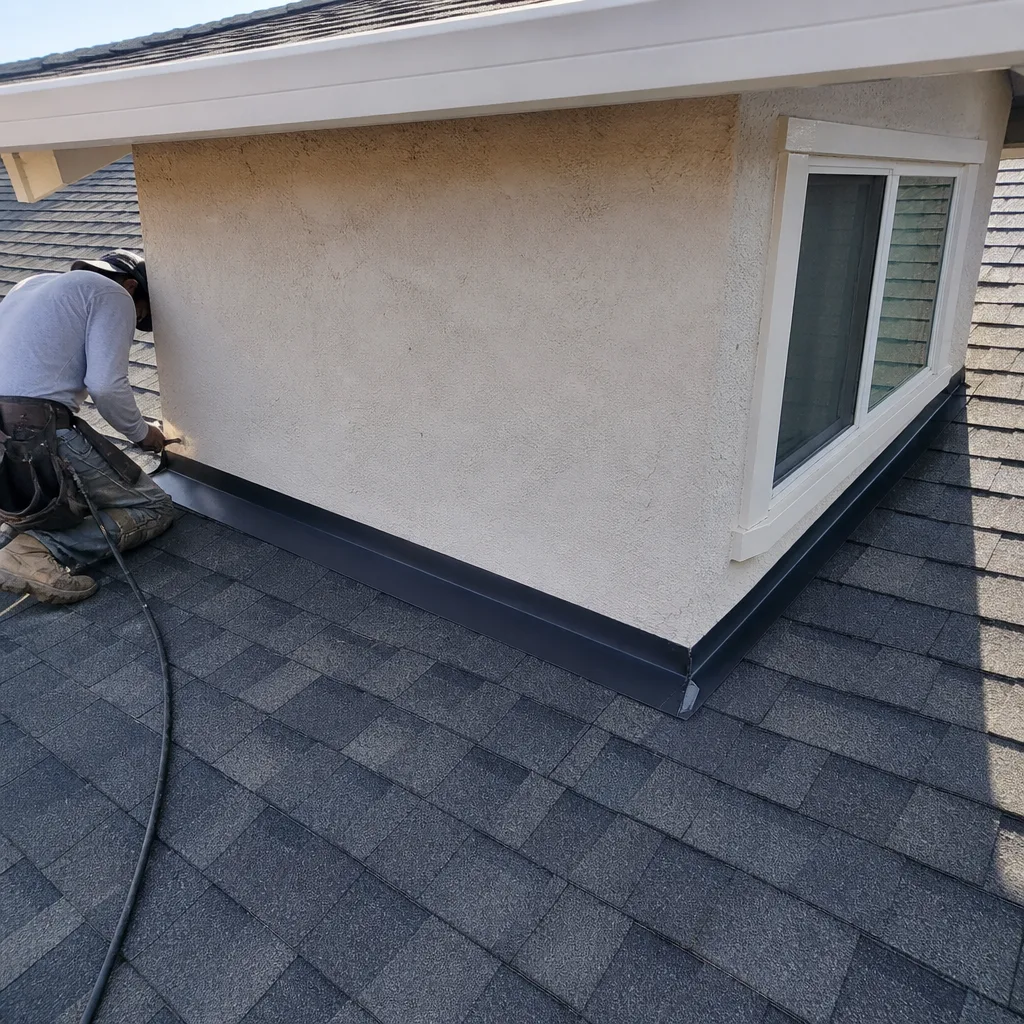 After
AfterReplacement Cost & What’s Included
For Sacramento homeowners, IKO flashing replacement installed costs fall into three bands. A single vent pipe boot replacement runs $220 to $320 on a one-story roof with easy ladder access. A chimney corner or wall step-flashing repair with shingle re-seating runs $300 to $420. Multiple penetrations or a second-story access add $80 to $150 per additional flashing point. The variance comes from roof pitch (anything steeper than 6/12 requires safety harness setup), access difficulty, and whether we need to cut back and replace surrounding shingles that have heat-sealed themselves to the old flashing.
The written price you receive before any work starts includes the flashing itself, the removal and disposal of the failed component, roof cement and sealant, shingle re-nailing and re-seating, and a written guarantee on the repair delivered before the crew leaves your driveway. If a replacement fails inside the guarantee period, we return and correct it at no charge under our 365-Day Done Right Promise. No change orders at the door, no “while we’re up there” surprises. Greg Holloway quotes the job after walking it himself, and the price he writes down is the price on the invoice.
DIY or Call Us?
What you can safely do is identify the failure: check the attic for daylight, look at pipe boots from a ladder (kept well away from the edge), and note where ceiling stains align with roof penetrations above. That is genuinely useful information for us and helps you understand the scope before anyone climbs up. What goes wrong with DIY flashing work is usually two things: homeowners on a steep Sacramento roof without fall protection, and sealant-only repairs that fail within one rainy season. Roof cement and silicone smeared around a cracked boot or lifted step flashing does not address the underlying metal fatigue or the decking beneath it. It buys you weeks, maybe one winter, and then the stain returns.
Flashing work on a roof edge or a 7/12 pitch is genuinely dangerous. Falls from a single-story roof are the most common roofing-related injury we hear about, precisely because the height feels manageable. If the flashing is above your comfort zone, call us at (279) 348-3049 and we’ll put an experienced, background-checked crew member on that ladder instead of you. The estimate is free.
FAQs
Plan on 10 to 15 years for neoprene and EPDM pipe boots and 15 to 20 years for galvanized step flashing in Sacramento’s high-UV climate. Homes with heavy south-facing exposure or roof surfaces that hold heat (dark shingle colors) tend to land at the shorter end of those ranges.
Mostly no. A sealant patch over cracked rubber or rusted-through metal buys you a few months at best, and the underlying leak path remains active. Replacement is the only fix that restores a watertight seal at the penetration. Call (279) 348-3049 for an exact quote, estimates are free.
A single pipe boot swap takes 45 minutes to 90 minutes once the crew is set up. A chimney corner or wall transition with shingle re-seating takes two to three hours. Multiple flashing points on the same visit typically take a full morning. We’ll confirm the window when we schedule, and we arrive in it.
We keep standard IKO-compatible flashing on the truck: EPDM pipe boots for 1½-inch and 3-inch vents, 24-gauge galvanized step flashing, chimney counter-flashing, and the sealants specified for IKO systems. We also stock compatible parts for GAF, Owens Corning, and CertainTeed roofs, so if your home has a mixed-material roof we can address all of it in one trip.
If you have a stain, a cracked boot, or daylight in the attic, call (279) 348-3049. We will tell you the price before we touch your roof, every time, no exceptions. The estimate is free, and a live person answers the phone when you call, day or night, in Sacramento.
Written by Greg Holloway, Owner, Tilehurst Roofing Sacramento at Tilehurst Roofing Sacramento, serving Sacramento and nearby areas.